4 SEMINARSTHE EQUIVALENT OF 15 DAYS OF TRAINING
4 video modules
24 hours of classes
15:55
Complete Formation

1. Introduction

Study of biodynamic embryology, focusing on human development and interactions during growth.Exploration of principles to improve the therapeutic practices of professionals.

Included Transcript
04:33

2. General

Examining the interaction between environment and embryology in individual development.Presenting a holistic approach to improving patient well-being.

Included Transcript
08:38

3. Chronology of the Different Systems

Evolution of cellular communication systems in embryology and impact on biodynamic osteopathy.

Included Transcript
07:33

4. Notions of epigenetics, tensegrity, electromagnetism

Exploration of the concepts of epigenetics, tensegrity and electromagnetism and their impact on the human body and osteopathic practice.Analysis of the effects of these notions on health care and therapeutic interactions.

Included Transcript
06:25

5. The cell: Metabolic fields and Differentiation

Mechanisms of cellular development and impact of polarization on the embryonic process.

Included Transcript
11:37

6. The 3 Embryological Tissues

Presentation of the three embryological tissues: ectoderm, endoderm and mesoderm, and their impact on the body in relation to therapeutic practice.

Included Transcript
47:51

7. Timeline, growth, synchronicities

Analysis of the chronology of embryonic development and associated movements, with a focus on their implications in osteopathy.

Included Transcript
03:59

8. Practice: Power in Motion

Analysis of the relationship between cell polarity and embryology.Details on the polarization of the oocyte, the interaction with the sperm and the importance of body electric fields in the health process.

Included Transcript
05:51

9. General continued

Examination of key concepts in embryonic development, including form field, mechano-transduction, and the impact of environmental factors on cell differentiation.Analysis of ectodermal, endodermal and mesodermal derivatives, as well as the phases of embryogenesis.

Included Transcript
05:52

10. Gametogenesis

Mechanisms of gametogenesis and their influence on fertility.Analysis of interactions between osteopathy and conception.

Included Transcript
02:38

11. Fertilization

Examination of the fertilization process including anatomy, ovarian mobility and in vitro fertilization (IVF) techniques.Analysis of the impacts of these elements on development and reproductive dynamics.

Included Transcript
14:26

12. Development Algorithm

Analysis of the embryonic development algorithm, with a focus on the progression from zygote to blastocoel and useful information for osteopathic practitioners.

Included Transcript
10:38

13. Blastocele migration

Phases of the migration of the blastocoel through the uterine tube towards its implantation between the 4th and 6th day.Changes in the lining of the uterus that facilitate this process.

Included Transcript
01:12

14. Implantation and Amniotic Cavity

Details about the embryo implantation process and its importance for early development.Description of the implantation of the embryo into the uterine mucosa.

Included Transcript
14:52

15. Setting up the 3rd Bedroom

Establishment of the third embryonic chamber and analysis of cavity formation and interaction during early embryonic development.

Included Transcript
06:17

16. Implementation of the Axial Process

Analysis of the foundations of the embryonic axial process and its impact on cranio-sacral development, in connection with biodynamic osteopathy.

Included Transcript
16:49

17. Organization of Metabolic Fields

Dynamics of metabolic fields and their impact on embryonic development and cellular organization.

Included Transcript
08:21

18. Meditation 1 - Breathing & Connection to the Breath of Life

Study of meditation focused on breathing and its link with embryonic power, promoting a state of calm conducive to interior transformations.

Included Transcript
04:45

19. Question J1: Orientation of the Wave in the Axial Process

Analysis of wave movement between the amniotic cavity and the yolk cavity, and its impact on embryonic development and cellular nutrition.

Included Transcript
02:00

20. Question J1: Establishment of the Mesoderm

Stages of mesoderm formation in the embryo, with a focus on the movements of the primitive streak and Hensen's node.

Included Transcript
02:33

21. Question J1: Primitive Line

Emergence of the primitive streak and formation of the notochord, highlighting their crucial role in embryonic development and connections between body structures.

Included Transcript
02:33

22. Question J1: Formation of the Embryonic Peduncle

Formation of the embryonic peduncle and its role in the development of the umbilical cord.

Included Transcript
02:33

23. Revision J1: Notochordal Process

Examination of the notochordal process and cellular organization around Hensen's node, along with associated developmental mechanisms.

Included Transcript
03:09

24. Revision J1: The Nodal Flow

Analysis of nodal flow and vesicles in the creation of internal asymmetry, essential for embryological understanding in osteopathy.

Included Transcript
03:43

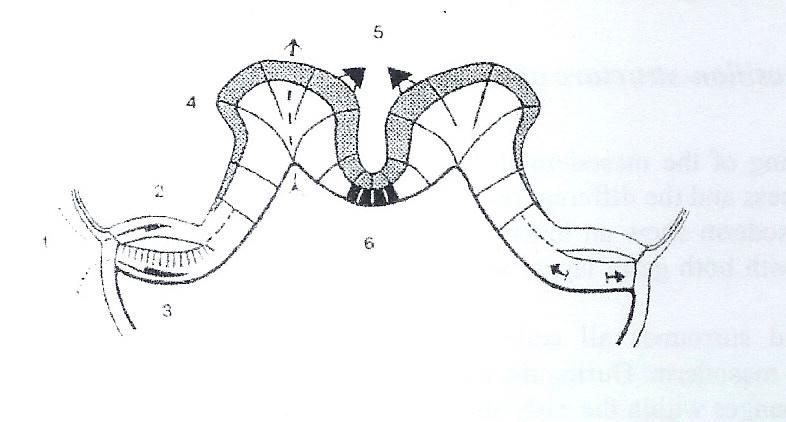
25. Neural Tube Closure

Analysis of the neural tube closure process, crucial for embryonic development and spinal column formation.

Included Transcript
03:10

26. Ventral Midline Reference

Role of the ventral midline in embryogenesis.Influence on embryonic development and health implications, including osteoporosis.

Included Transcript
05:28

27. Demo

Osteopathic demonstration on techniques for releasing muscular tension and body work.

Included Transcript
16:33

28. Meditation

Meditation techniques to connect to the breath and observe the present moment.Kind thinking exercise to improve personal well-being and relationships.

Included Transcript
02:05

29. Embryo plication

Analysis of the embryonic plication process and the role of the notochord in joint development and embryonic growth.

Included Transcript
59:59

30. The Diaphragm

Formation of the diaphragm from embryonic structures and influence on the functional development of the heart.

Included Transcript
14:51

31. Practical Diaphragm - 3 Techniques

Two diaphragm release techniques to optimize respiratory function.Protocols with evaluation and mobilization stages, based on a biodynamic approach.

Included Transcript
16:09

32. Guided Practice: Biodynamic Diaphragm

Analysis of the harmonization of the breath of life and inner tranquility in a biodynamic therapeutic process.

Included Transcript
07:05

33. Meditation J3

Focus on body preparation and vital connection through breathing exercises, including alternate nostril breathing and deep breathing techniques.

Included Transcript
13:42

34. Questions J2

Importance of cerebral movement in cranial osteopathy.Presentation of the interconnections between the viscerocranium, the heart, the diaphragm and the immune system.

Included Transcript
08:08

35. The Neural Plate

Neural plate dynamics and notochordal process, impact on embryonic formation and neural plate curvature.Analysis of fluidic, vascular interactions and molecular elements in neural tube development.

Included Transcript
21:32

36. The Practical Neural Plate

Restoration of bodily homogeneity through a gentle approach, aimed at optimizing the nervous system and improving perception in biodynamics.

Included Transcript
18:22

37. The Practical Brain

Biodynamic approach to the brain, identification of expansion levels and revitalization strategies.Study of cephalic and pontine movements with a focus on the sensation of expansion and embryological synchronization.

Included Transcript
13:08

38. The Brain: The Ventricles

Analysis of the formation and interactions of brain structures during embryological development, with a link to osteopathic practice.

Included Transcript
14:52

39. Summary of the Movement

Analysis of embryonic development with a focus on embryonic movement and the electrical axis.Study of brainization processes and their impact on the development of embryonic structures.

Included Transcript
05:02

40. Introduction Biodynamics

Examination of the concept of biodynamics linked to ontogenetic developmental movement and analysis of the craniosacral system from anatomical, embryological and dynamic perspectives.

Included Transcript
00:42

41. Characteristics of Different Fabrics

Characteristics of body tissues, link to tensegrity and homeostasis, and impact on digestive health and tissue dynamics.

Included Transcript
03:25

43. Classification of the Different Metabolic Fields

Classification of metabolic fields with focus on the Corrosion Field and the Suction Field.Illustration of the processes of tissue fusion and glandular formation during embryonic development.

Included Transcript
18:39

44. Acid Base Balance and Hypothalamic-Pituitary System

Examination of the influence of acid-base balance on the body and posture, with integration to the hypothalamic-pituitary system in a therapeutic context.

Included Transcript
04:50

45. Demo: Ventricular System

Practical demonstration of the biodynamic approach on the ventricular system with a focus on tactile perception and the exploration of tissue layers.

Included Transcript
03:45

46. Guided Practice: Ventricular Systems

Guided practice to explore the ventricular systems through subtle touch, focused on developing practitioners' tactile perception.

Included Transcript
10:20

47. Neural Crests

Role of neural crests in embryological development and their impact on the peripheral nervous system and organ health.Exploration of the concepts of cell migration, differentiation and therapeutic implications.

Included Transcript
11:21

48. Notes

Examination of cranial development and its connection to concepts of time, with practical tools for overcoming emotional blocks.

Included Transcript
03:47

49. Meditation

Analysis of the effects of meditation on rest and personal satisfaction, with an emphasis on mindfulness and appreciation of the present moment.

Included Transcript
01:11

50. The Skull

Influence of brain development on intracranial membranes and the venous system.Role of the skull base in the skull-sacral mechanism.Interaction between teeth, posture and body rhythms in neuro-digestive balance.

Included Transcript
01:00:35

51. Demo: The Dural Sheath

Rebalancing of the middle dural sheath to improve fluidity and development.Techniques to release tension and optimize embryonic movements in children and adults.

Included Transcript
06:08

52. Conclusion Phase 1

Analysis of the three fundamental midlines and their connection with the urogenital area.Role of anchoring in emotional balance and harmonization of the mineral, plant and animal kingdoms for clear discernment.

Included Transcript
02:03
Home
Timeline
Video Courses
AI Assistant
LOG IN
EN
EN

PHASE 1

Ectoderm

First week to third week. From conception to the formation of the first germ layer. Development of the nervous system and epidermis.

09:0551 VIDEOS

LEARNINGFLUID AND INTUITIVE
Designed for you
100% Autonomous
Camera toggle
12:29
ECTODERM
ENDODERM
MESODERM
EYE
0:00
3:43
x1
x1.25
04 - ESTABLISHMENT OF MESODERM AND NOTOCHORD
03:43
Summary
Interactive Transcript
Auto

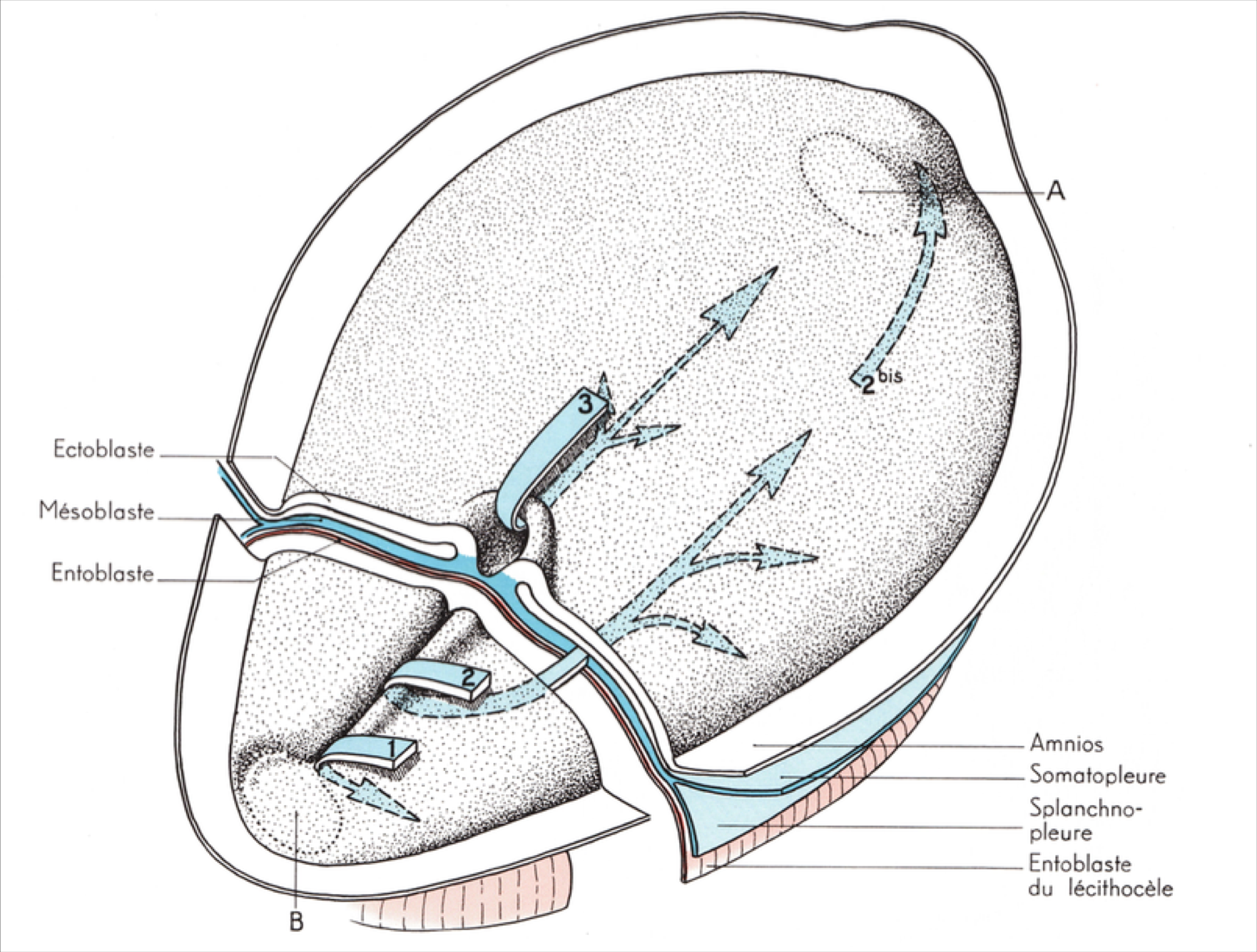
ESTABLISHMENT OF THE MESODERM

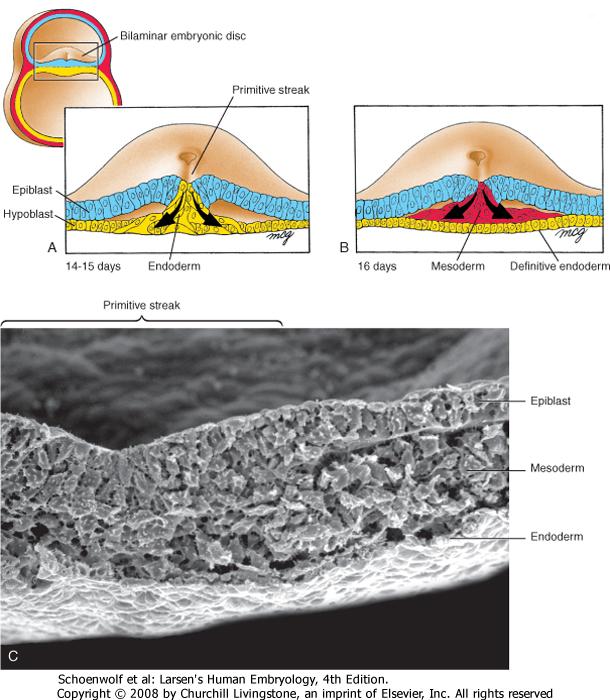
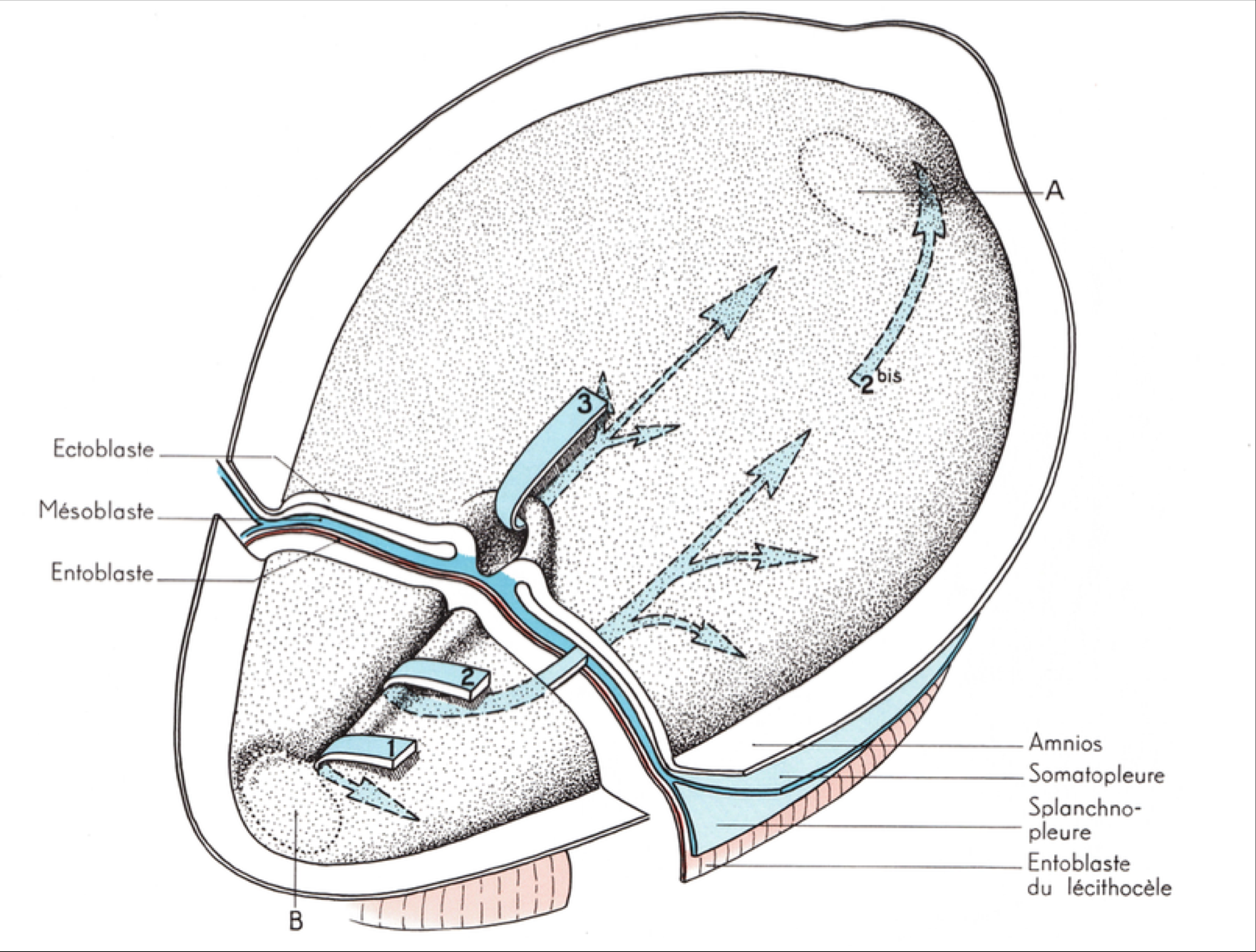
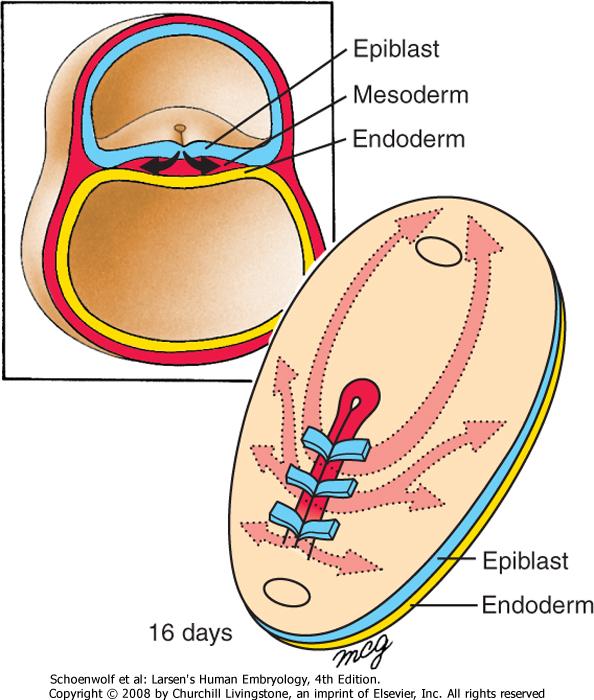
The first crucial step is the establishment of the mesoderm. We observe the appearance of the primitive streak and the notochordal axis.

There is an aspiration field between the ectodermal and endodermal tissues, creating a movement where a space will be filled.

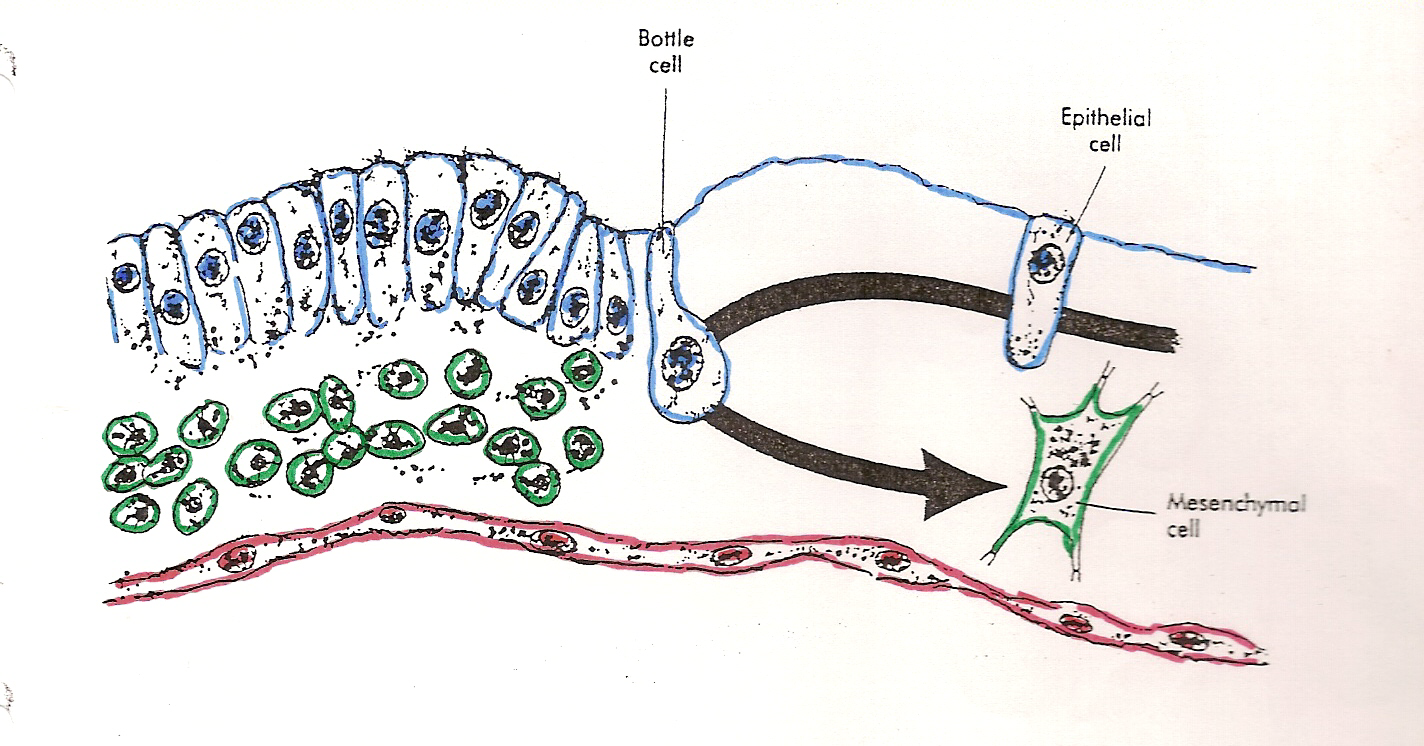
The mesodermal tissue originates from the epiblastic tissue, not the ectodermal tissue. The bottle cells are drawn to the center.

This is how the space between the epiblastic and hypoblastic tissues becomes the primitive mesenchymal tissue, the future mesoderm.

Beginning of neurulation

ROLE OF THE NOTOCHORD

The notochord influences this process. It is an electrical field that acts.

During the previous lesson, we worked on the sacrum, focusing on the notochordal axis.

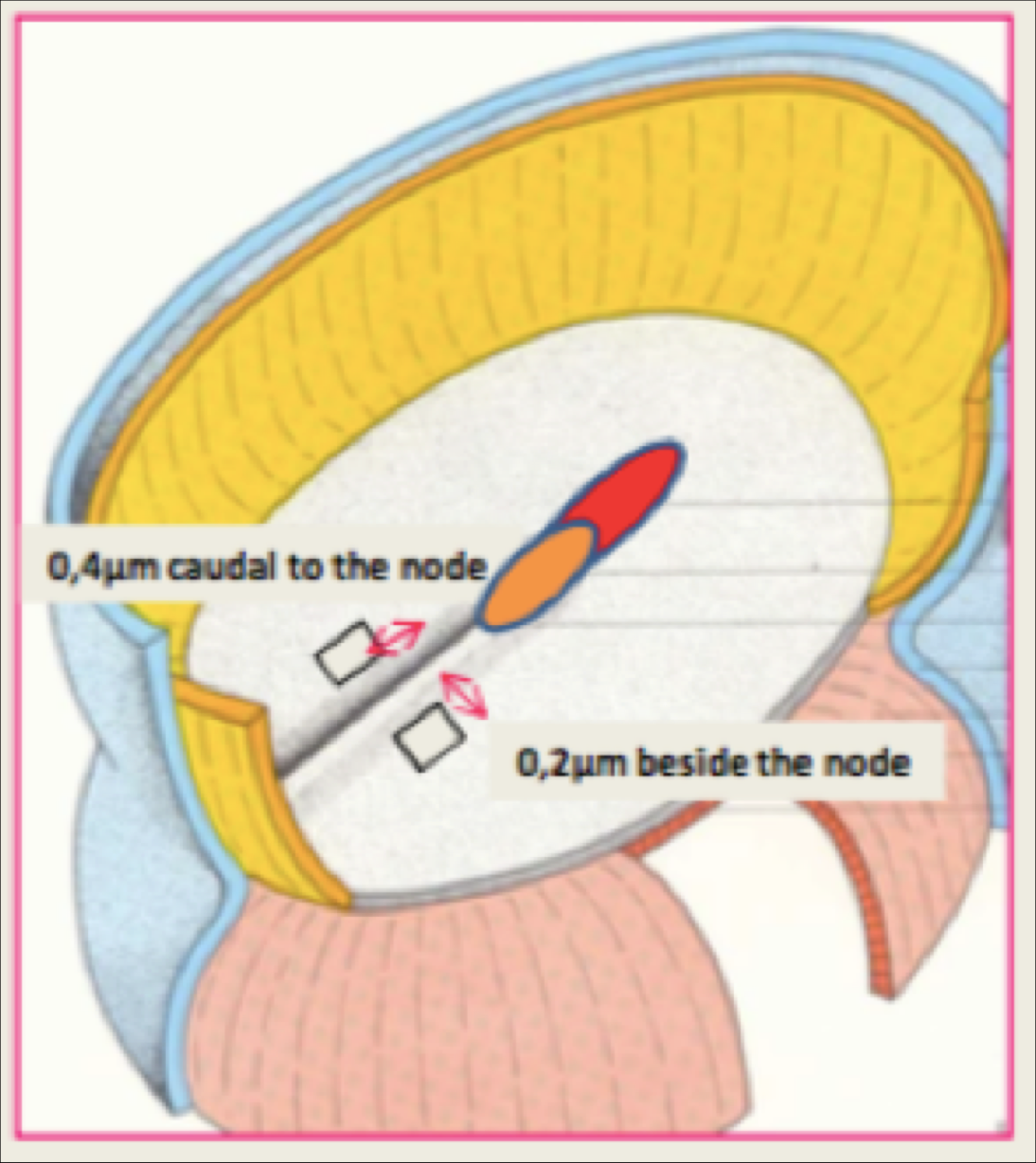
We will explore the process in more depth. The notochord, positioned here, is linked to Hensen's node.

Early embryonic development

This generates a wave movement, a cranio-caudal movement, where the primitive streak progressively regresses backward.

This primitive streak is found at the sacro-coccygeal base, forming an energetic vestige.

Human gastrulation at 3 weeks

PRACTICE: THE COCCYX AND IMPULSES

We will practice by focusing on the coccyx, as this area condenses energy.

The first impulse happens on the hypoblastic tissue. This is when the epiblast becomes ectoderm and the hypoblast becomes endoderm.

Human gastrulation
Human gastrulation

This means that the epiblast informs all my tissues, and is itself fully integrated by my notochord. It is an electromagnetic field informing the body.

Human embryonic gastrulation
Mesenchymal migration
Gastrulation 16 days
Home
Timeline
Video Courses
AI Assistant
LOG IN
EN
EN

Intuitive Design

A natural navigation to
study at your own pace

Transcription in 7 languages
FR
EN
ES
Offline download
Camera toggle
A POWERFUL TOOLSTEP-BY-STEP CHRONOLOGY
Precise Evolution
Step by step
11:15
DEVELOPMENT
Avant Jour 1Polarité, Préparation et Informations
Day 1Encounter & Calcium Wave
Jours 1 à 4Stagnation Radicale et Clivage
Jours 5 à 8L'Éclosion et la Nidation
Days 7 to 14Reticulum and Extr. Coelom
Days 14 to 21Gastrulation and Laterality
Jours 21 à 22Neurulation, Oeil et Cœur
Jours 22 à 28La Grande Cascade Cinétique
Day 28Wonderful Synchronicity
De Jour 35 à 2 MoisSomites, Côtes et Voûte Crânienne
Jusqu'à 12 ansDentition et Maturation Végétative
Avant Jour 1Période Pré-conceptuelle & Maturation

Polarité, Préparation et Informations

L'ovocyte n'est pas neutre. Dès sa maturation dans les follicules, il est baigné dans les fluides systémiques de la mère, s'imprégnant de l'environnement biochimique et émotionnel.

Process

1
N/A

Maturation & Empreinte Transgénérationnelle

Le stock d'ovocytes est constitué in utero. Les chocs émotionnels et la qualité de la circulation sanguine maternelle imprègnent déjà ces cellules. L'ovocyte intègre les stress de la mère mais aussi de la grand-mère.

2
N/A

Drapeau de Wolpert (Concentration)

Mise en place de l'axe métabolique asymétrique. Les protéines et l'ARN messager maternels se polarisent, déplaçant le noyau vers le pôle animal. C'est l'apparition de l'axe crânio-caudal de référence, bien avant la fécondation.

3
N/A

Pôle Assimilateur

Ségrégation entre le vitellus (réserves énergétiques) et les gradients morphogènes. Le cytosquelette s'organise et met l'ovocyte sous tension pour la réception.

Home
Timeline
Video Courses
AI Assistant
LOG IN
EN
EN

DAY-BY-DAY DEVELOPMENT

THE CHRONOLOGY

Follow the precise day-by-day evolution of the embryo.

THE A.I. ASSISTANTDEDICATED TO EMBRYOLOGY
Available 24/7
In-depth analysis
EMBRYO AI
FASTDEEP

Hello! I am Embryo AI, your dedicated assistant for Marc Damoiseaux's embryology course.

Ask me your questions about kinetic cascades, layers or biodynamic practice.

Home
Timeline
Video Courses
AI Assistant
LOG IN
EN
EN

AI Assistant

A concept
escaping you?

Smart search

Video references
Ectoderm
Mesoderm
Endoderm
Eye
THE MANIFESTOA THERAPEUTIC SYNERGY

What if embryology was not just a subject to learn... but an experience to live?

What if, instead of observing the development of life... we entered into its movement?

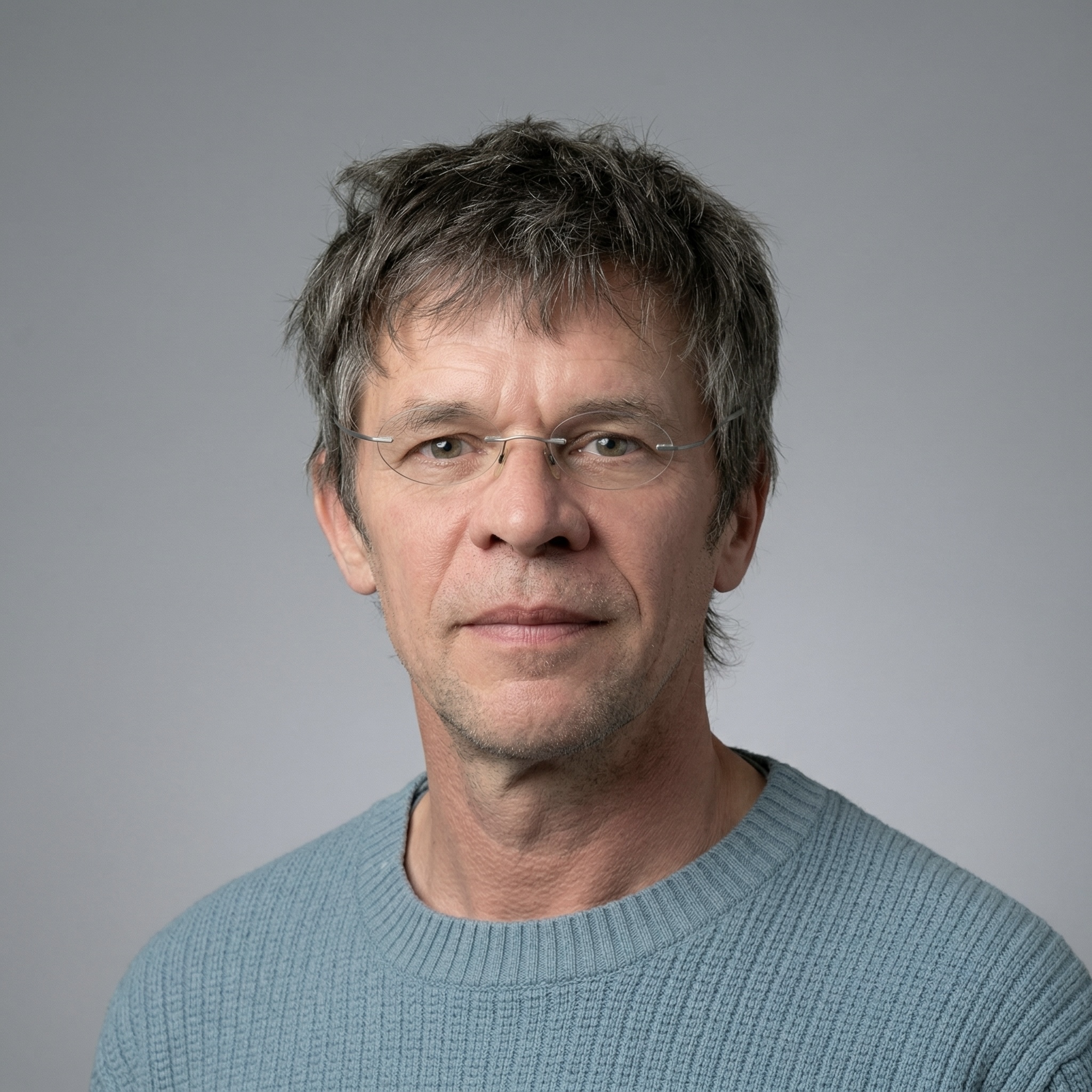
This online course was born from a meeting.

The meeting between Marc Damoiseaux, an osteopath for over 30 years, a passionate teacher with a living vision of embryology... and Philippe Guillaume, physical therapist, biokinergist, creator of FeelProd and the podcast "Techniques Douces Tissulaires".

This dual competence (therapist and director) has brought a true pedagogical dimension to the video editing of the training: keeping the essentials, structuring precise chapters, and preserving the fluidity of the teaching.

Marc Damoiseaux
MARC DAMOISEAUX
Philippe Guillaume
PHILIPPE GUILLAUME
Testimonials

WHAT THEY SAY

"Embryology explained by Marc Damoiseaux brings concreteness to the subtlety of touch."

Philippe Guillaume
Biokinergist
Investment

A UNIQUE OFFER. NO COMPROMISE.

Discovery Option

Freely explore the universe of embryology with generous access for the curious.

0$
  • 8 educational videos (2 free per seminar)
  • Full access to the original Podcast
  • The complete interactive Timeline
  • The entire VOD catalog (168 videos)
  • Embryo-AI (Virtual AI Assistant)
  • Offline viewing mode
Most popular

The Complete Training

The complete, uncompromising experience for professionals and free spirits.

Launch offer
$650
430$

Note that 600 € is the price of a single in-person seminar. Here, you get the equivalent of 4 complete seminars.

One-time or installment payment

  • The entire VOD catalog (168 videos)
  • Embryo-AI (Virtual AI Assistant)
  • Full access to the original Podcast
  • The complete interactive Timeline
  • Offline viewing mode
  • Valid for 10 years & Updates included

First update (April 21, 2026): All podcasts now available in 7 languages.
Step 1 to discover or purchase the training.

FAQ

YOUR QUESTIONS

A question? An update?

We are always listening to continually improve this tool.

Contact us

Available on
all your screens

Embryologie

EMBRYOLOGY

BIODYNAMIC

MARC DAMOISEAUX'S COURSE, OSTEOPATH D.O
First Name
Last Name
Profession (e.g. Osteopath)
your@email.com
ACCESS
Embryologie

EMBRYOLOGY

BIODYNAMIC

MARC DAMOISEAUX'S COURSE, OSTEOPATH D.O
First Name
Last Name
Profession (e.g. Osteopath)
your@email.com
ACCESS
Embryologie

EMBRYOLOGY

BIODYNAMIC

MARC DAMOISEAUX'S COURSE, OSTEOPATH D.O
First Name
Last Name
Profession (e.g. Osteopath)
your@email.com
ACCESS